Kelp Forest and Nearshore Fisheries — PISCO / CCFRP
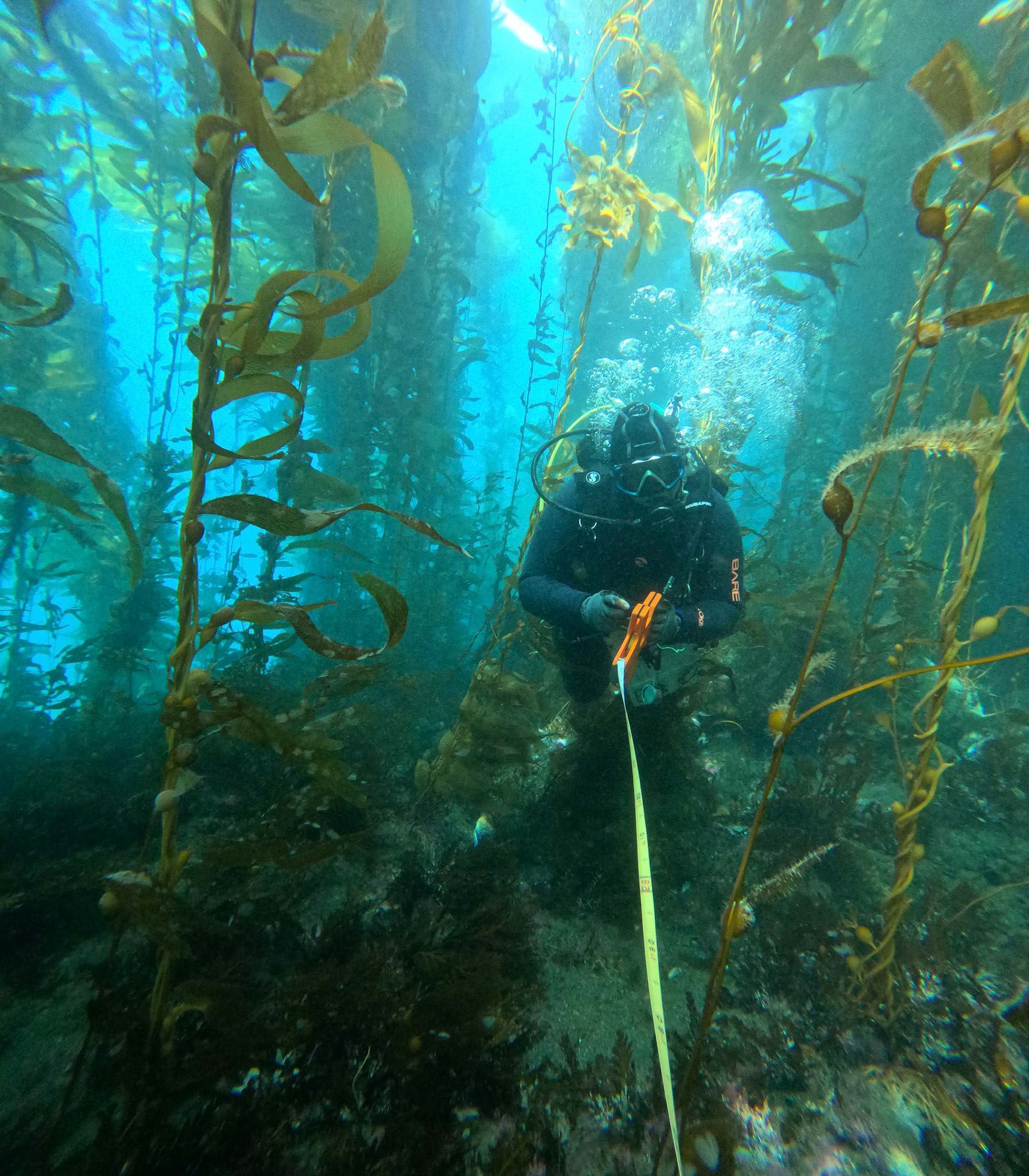
Overview
In the Caselle Lab I worked on PISCO kelp-forest monitoring across the Northern Channel Islands and helped with CCFRP nearshore stock assessments. The work combines standardized transects (benthic & fish), hook-and-line surveys with volunteer anglers, and careful QA/QC to produce long-term datasets used for MPA evaluation and fisheries management.
Quick Facts
- Role: Field Research Assistant, Caselle Lab (UCSB)
- When: Jun – Oct 2024
- Skills: underwater transects (benthic & fish), data entry & QA/QC, small-craft operations, gear logistics, volunteer coordination
Background and Questions
- How are kelp-forest communities changing within and outside MPAs?
- What do catch-per-unit-effort and size-structure from CCFRP say about nearshore fish populations and local protection benefits?
Methods
- PISCO (subtidal): standardized belt and point-count transects for fish; quadrats & swathes for invertebrates and macroalgae; site metadata (depth, viz, surge).
- CCFRP (nearshore): spatially replicated hook-and-line sampling, onboard lengths/ID, release handling, and effort tracking.
- Data & QA/QC: immediate log reconciliation, species code checks, range validation, and tidy exports for lab databases.
Results (preview)
- Completed island circuits with full transect suites; preliminary summaries feed into annual MPA status reviews.
- CCFRP trips contributed length-frequency and CPUE updates for priority species; figures pending program release.
Outputs
- Cruise logs and data submissions (PISCO/CCFRP databases)
- Figures for internal updates and program briefings (to be added when public)
Acknowledgements
Caselle Lab (UCSB), PISCO partners, CCFRP volunteer anglers and captains, and Channel Islands staff for logistics and access.