Nicothoid Copepod Parasite — Cancrid Rock Crabs
Overview
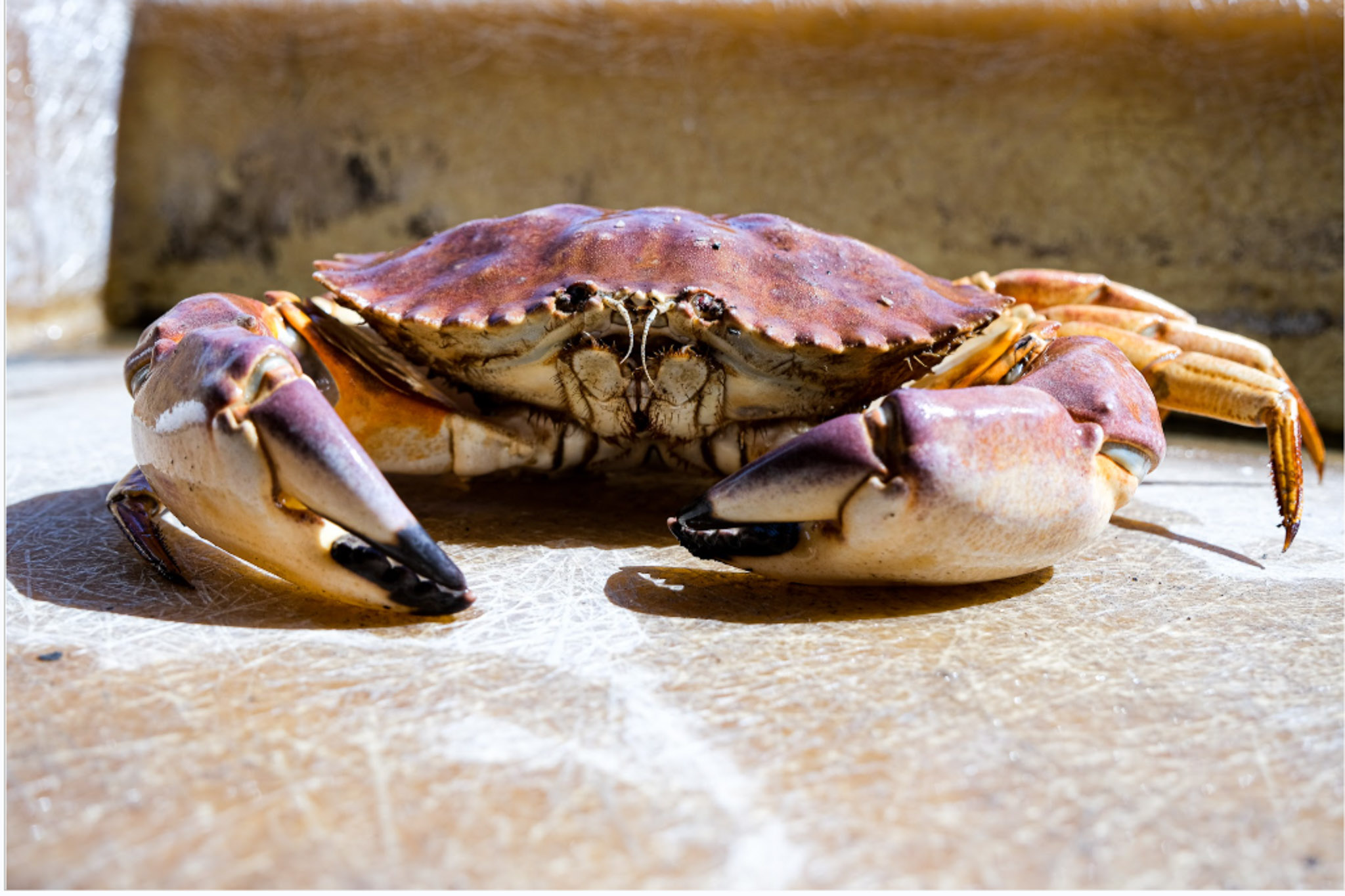
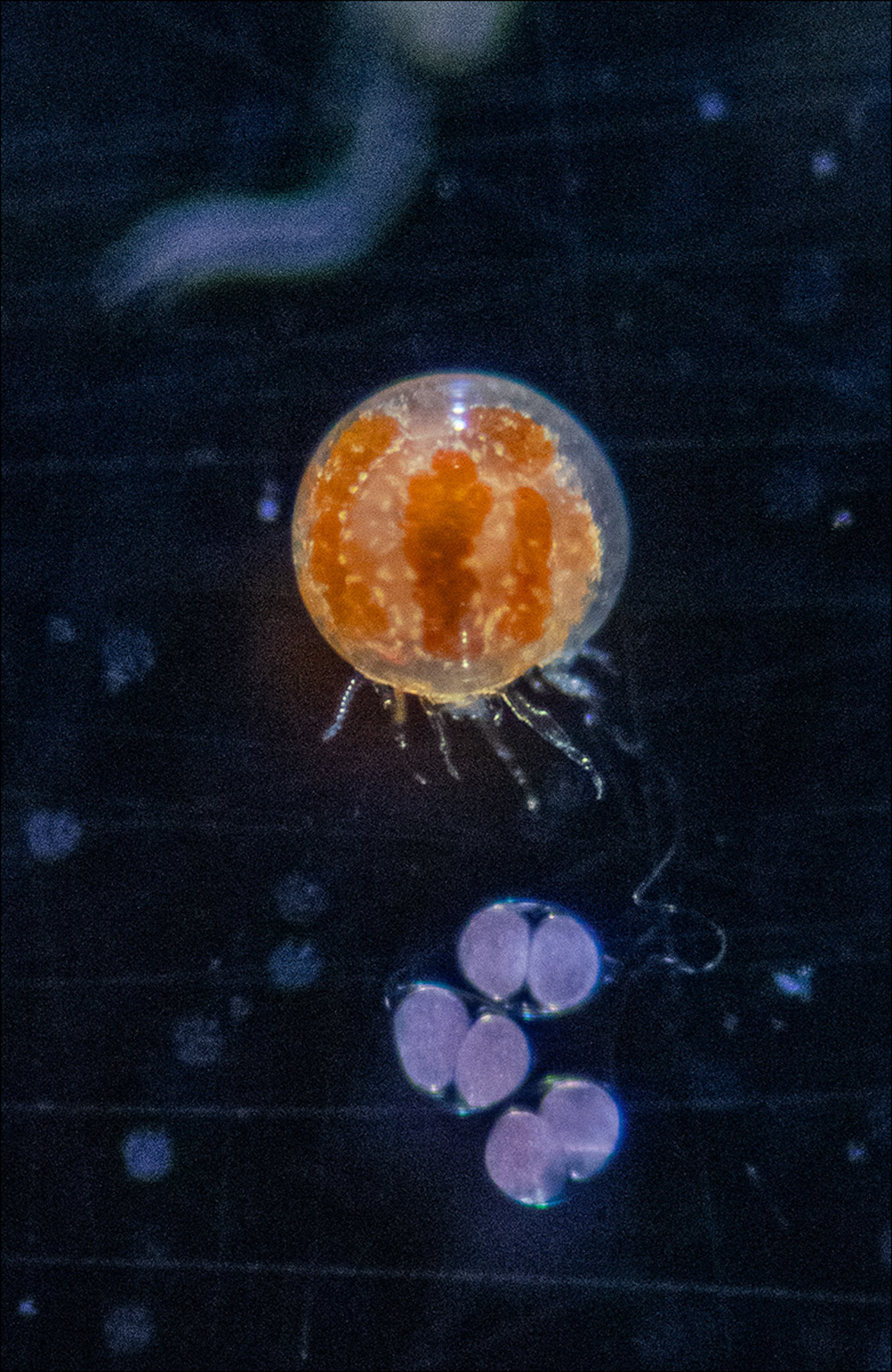
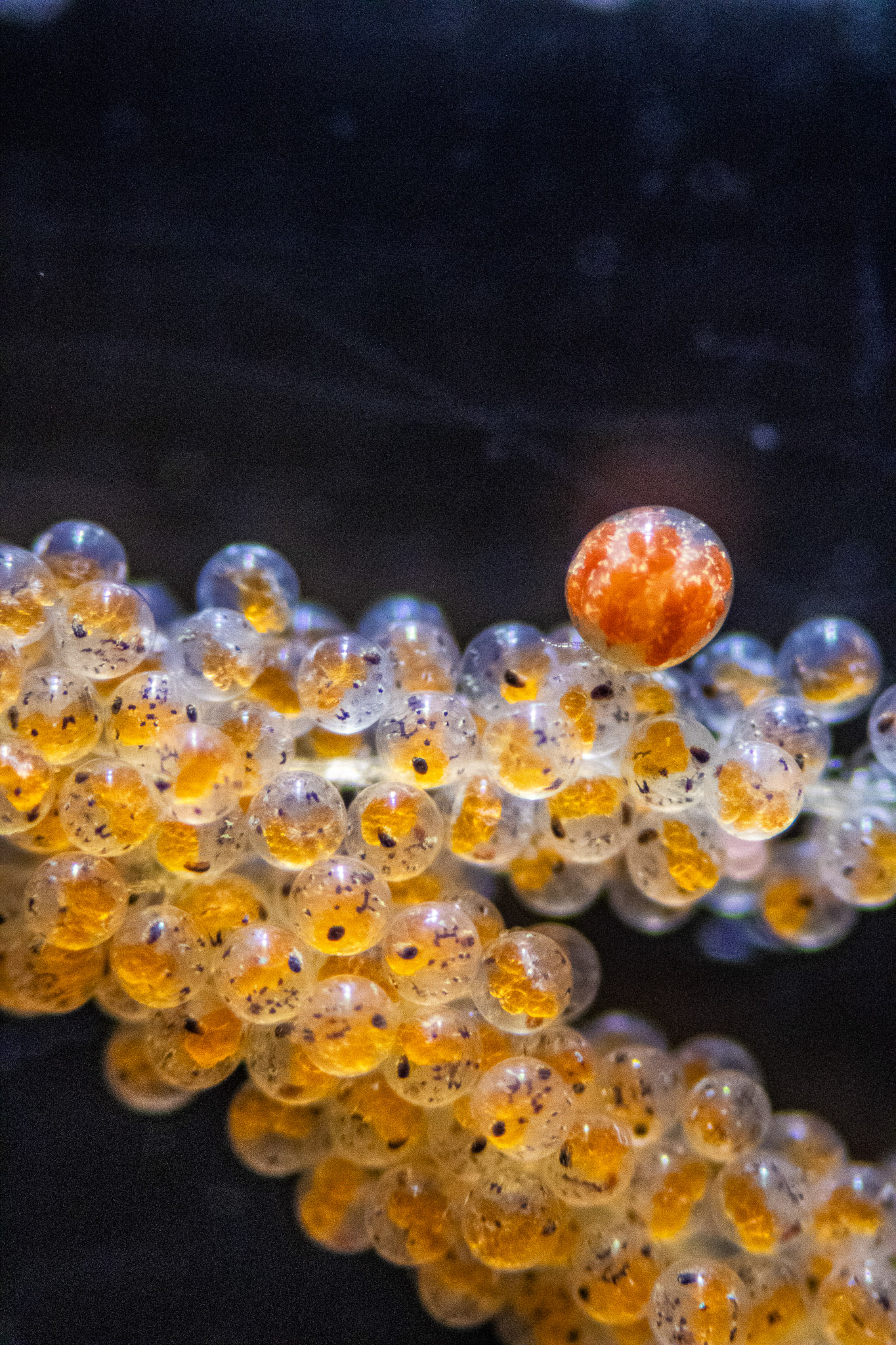
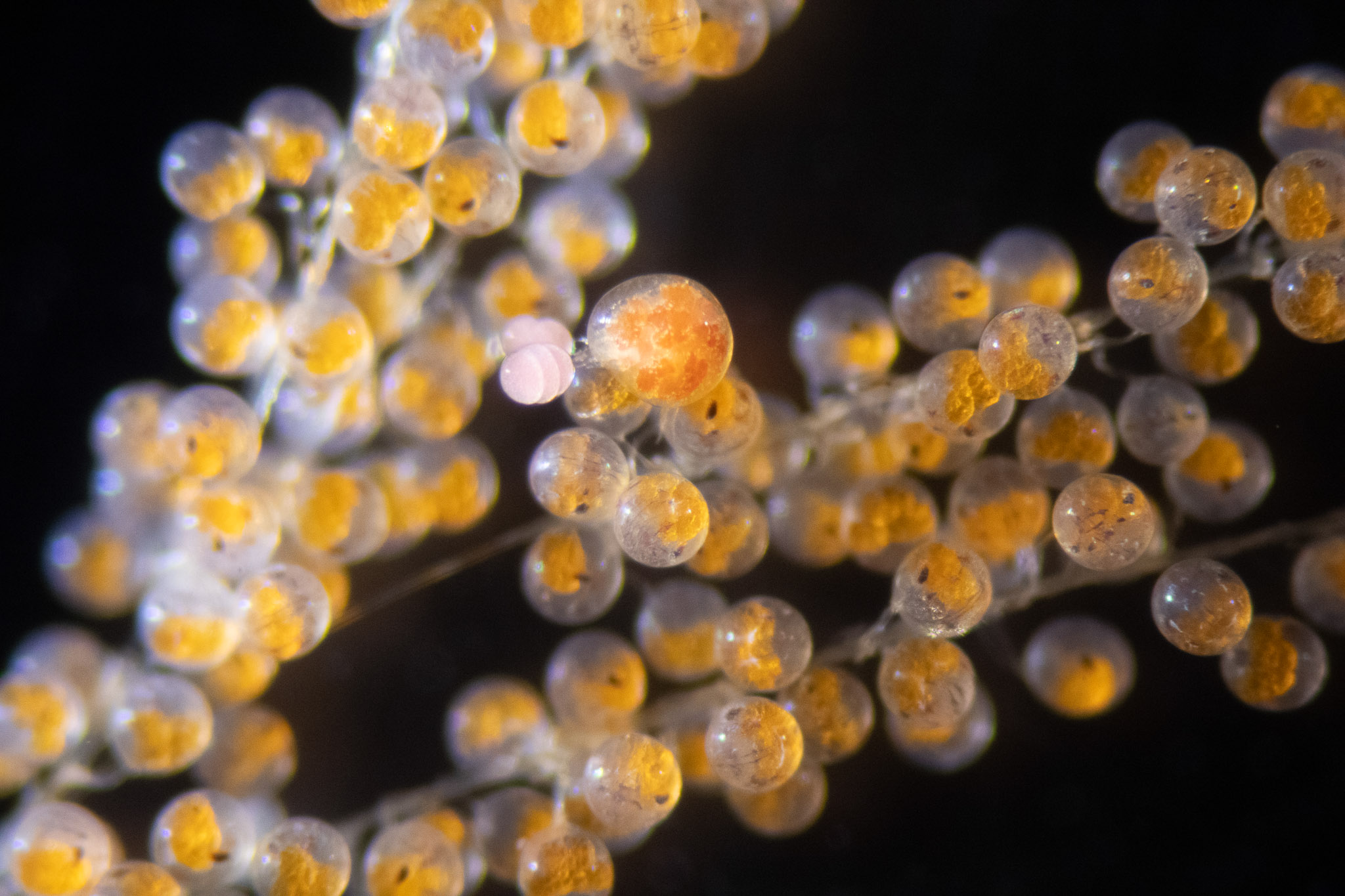
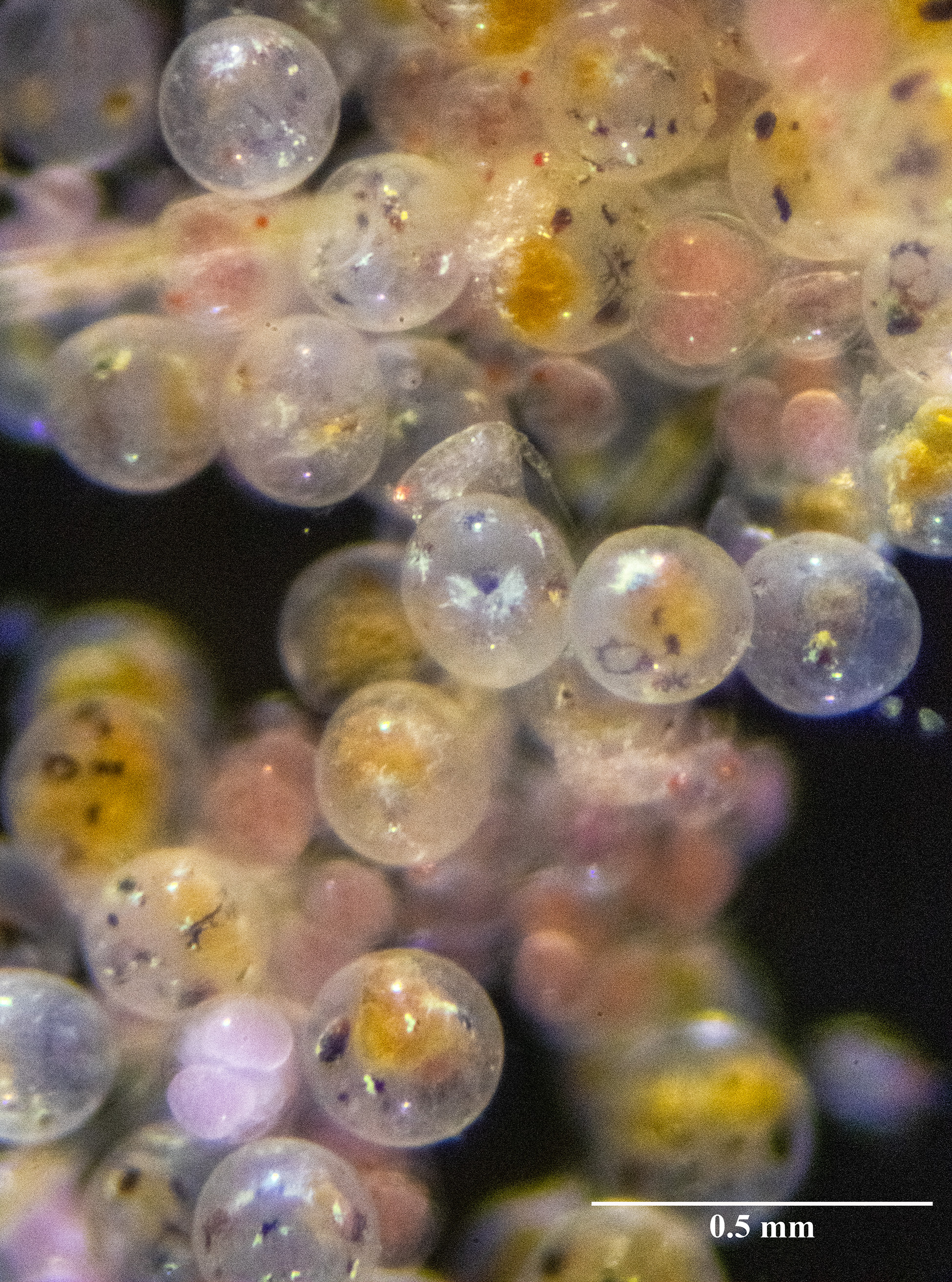
During a classroom lab at UCSB in October 2021, we unexpectedly found a nicothoid copepod egg predator (Nicothoidae, cf. Choniosphaera sp.) infesting brooding Pacific rock crabs along the Gaviota Coast (Santa Barbara, CA). Follow-up collections revealed that this parasite occurs on three commercially important cancrids and can reach very high intensities on egg masses, with adults closely mimicking crab eggs in size and color.
This work documents the first record of a nicothoid egg predator on cancrid crabs in the Eastern Pacific, describes its life cycle across egg and gill microhabitats, and highlights implications for fecundity and fishery sustainability.
Citation and Links
Orli, J.E., Lecuona, S.M., Plewe, G.O., Gadler, C.N., Kuris, A.M., Tang, D., & Zilz, Z.L. 2025.
Discovery of an unidentified species of nicothoid copepod infesting cancrid crabs in Santa Barbara, California.
Ecology 106(12): e70263. https://doi.org/10.1002/ecy.70263
- Article (open access):
- Ecology — 10.1002/ecy.70263
- Data and Code:
- Dryad — 10.5061/dryad.rv15dv4fw
- Video archive:
- Zenodo — 10.5281/zenodo.10699477
Quick Facts
- Role: Lead author, Kuris Lab (UCSB)
- When: 2021–2025
- Hosts: Metacarcinus anthonyi, Romaleon antennarium, Cancer productus
- Depth/Region: 66–100 m traps along the Gaviota Coast, plus additional Southern California sites
- Project type: Scientific Naturalist — discovery, natural history, and fishery context
- Skills: field collections, crab ID, dissections, brood-stage scoring, parasite life-history description, figure & media design, open data curation
Background and Questions
Externally brooding crustaceans host a long list of egg predators (nemerteans, copepods, other symbionts) that can cause large brood losses and even contribute to fishery collapses. Nicothoid copepods are specialized crustacean associates that often mimic host eggs and feed on yolk through the egg shell.
We focus on:
- How common is this nicothoid on California rock crabs, and which host stages are most affected?
- How does its life cycle use egg masses and gills as microhabitats?
- What does near-ubiquitous infestation mean for fecundity and management of a data-poor rock crab fishery?
Methods
Discovery and Collections
- Initial discovery in a UCSB invertebrate biology lab, during a teaching demo of crab egg predators.
- Targeted collections of ovigerous cancrids by local fishers using baited pots at 66–100 m along the Gaviota Coast; crabs held in flow-through seawater for detailed inspection.
Host and Parasite Observations
- Identified host species and recorded sex, size, reproductive status.
- Scored egg masses by egg developmental stage (EDS), presence of:
- Adult female nicothoids
- Nicothoid egg sacs and embryos
- Nauplii and copepodids
- Co-occurring egg predators (e.g., Carcinonemertes spp.).
- Adult female nicothoids
- Inspected gill lamellae in both sexes for copepodids and other stages.
Life-Cycle Synthesis
- Tracked color and size changes in adult females (from yellow/orange to maroon as they grow and become heavily gravid).
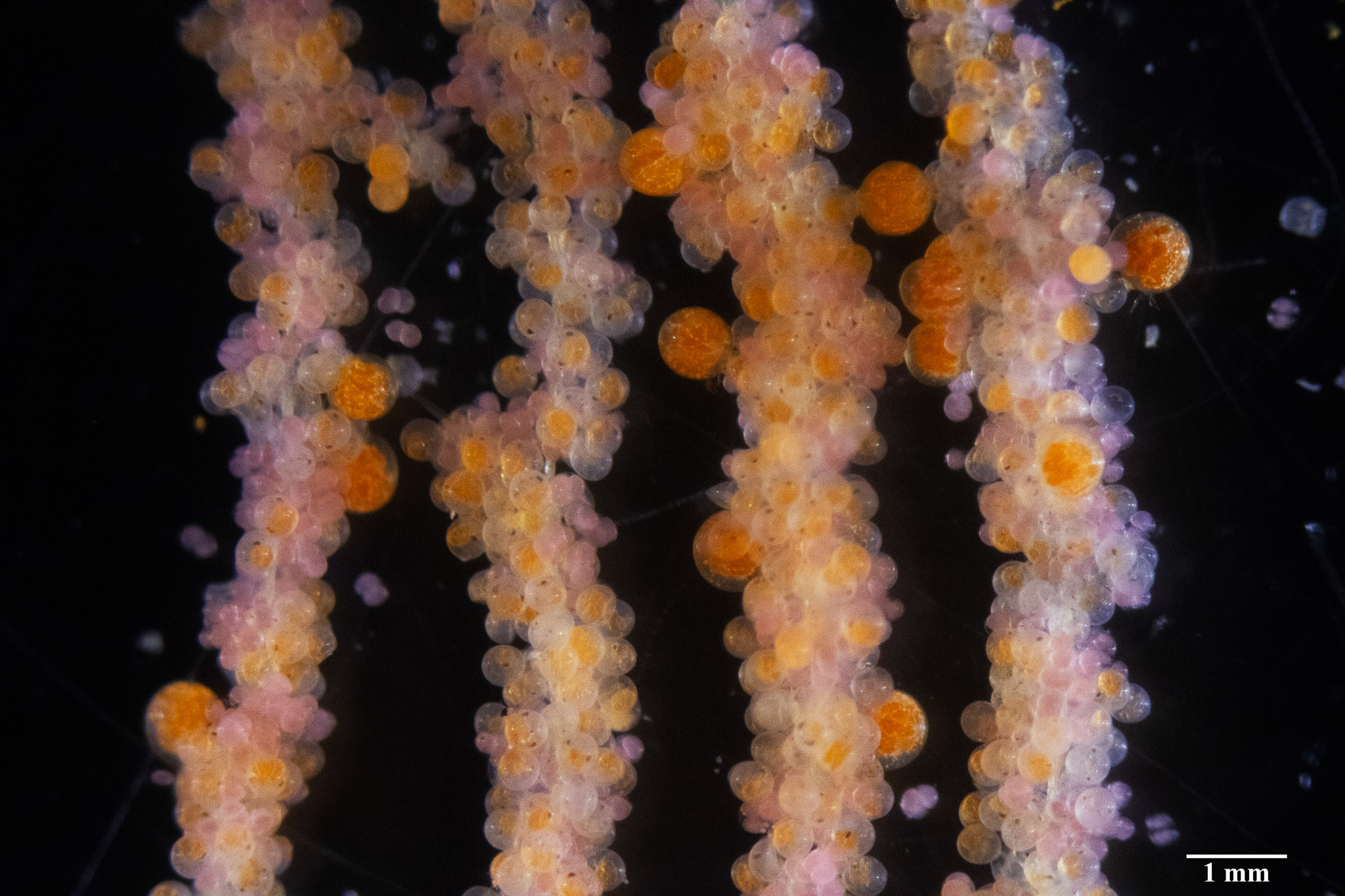
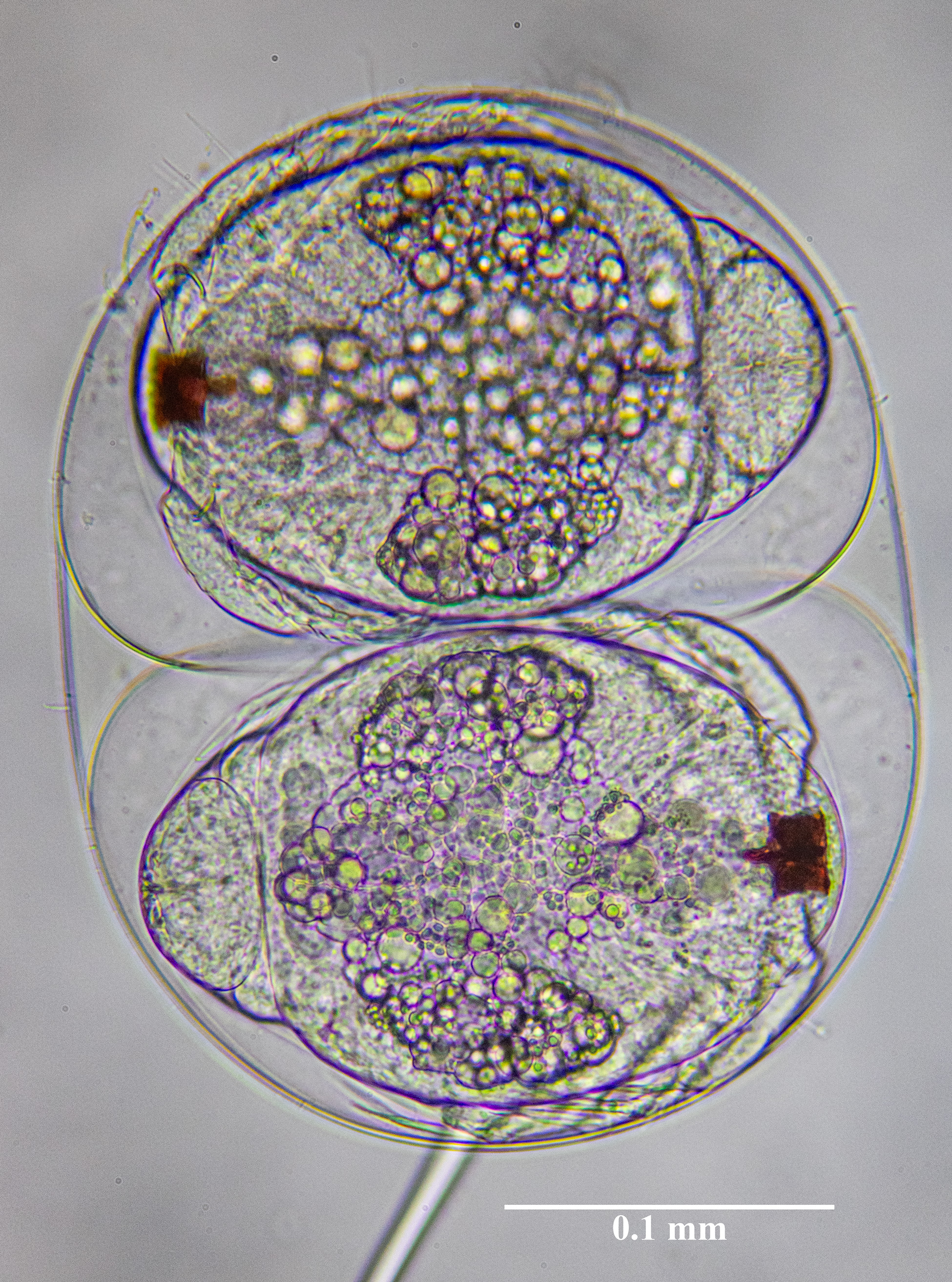
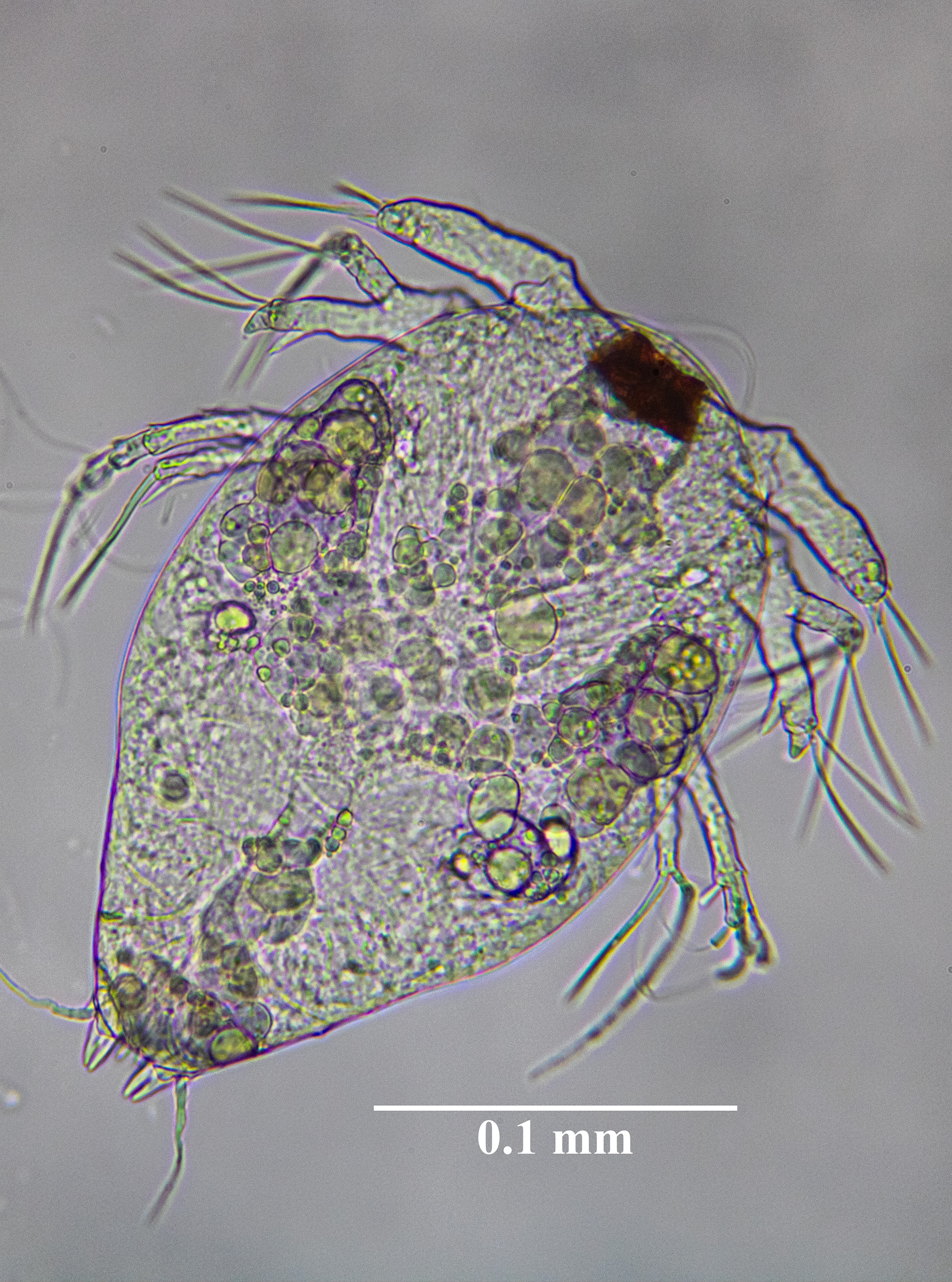
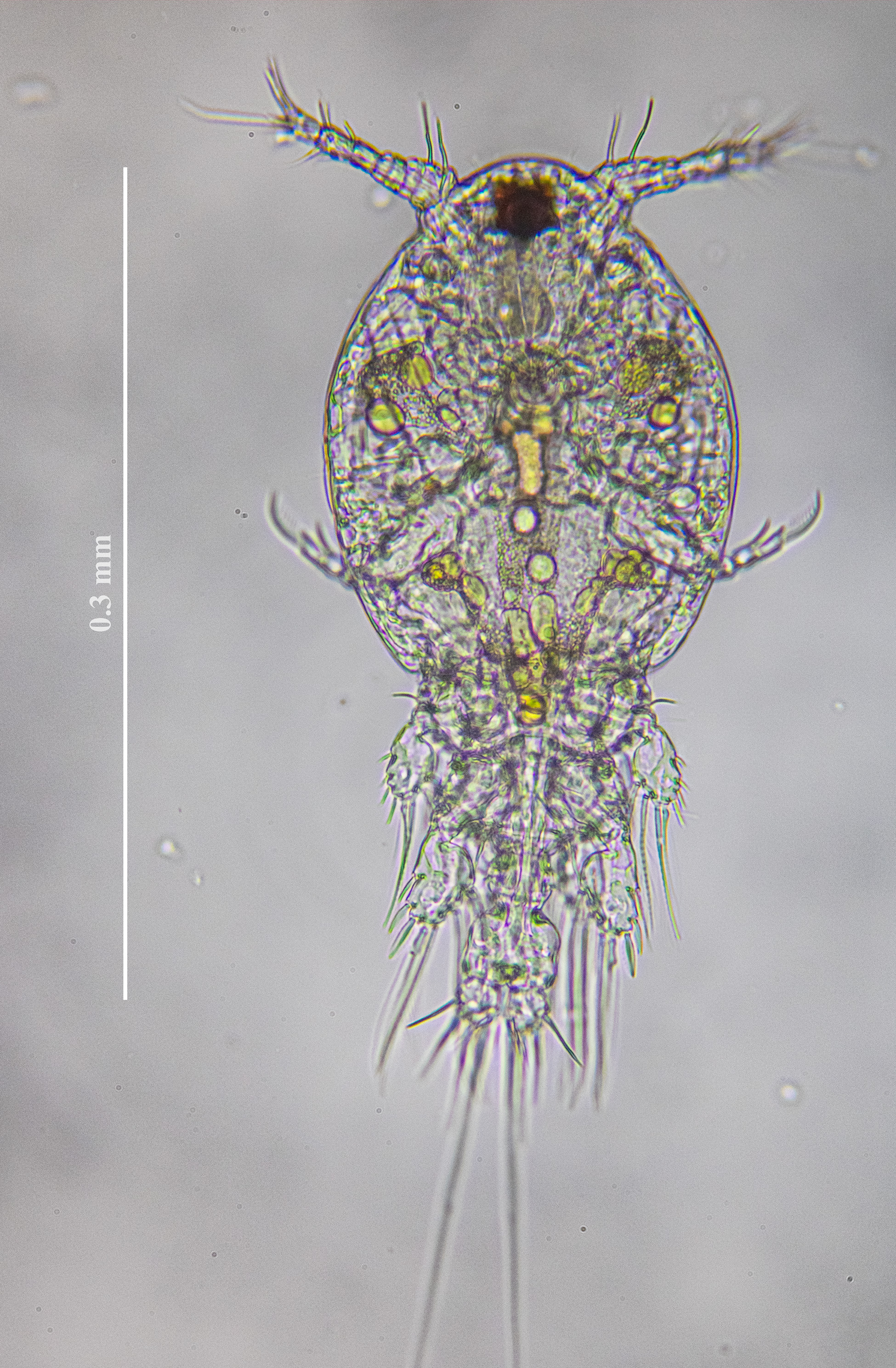
- Documented egg sac structure (1–4 embryos per sac) and development from embryo → nauplius → copepodid.
- Recorded timing of copepodid peaks in egg masses and their presence in gills before and after hatching, to infer how the parasite bridges between host broods.
Key Results
1. Novel Nicothoid Outbreak on Eastern Pacific Cancrids
- The parasite matches key adult female traits of Choniosphaera (globular body, ventral mouthparts, leg and antennule morphology), but differs enough to remain unidentified at the species level.
- This is the first report of a nicothoid egg predator on cancrid crabs in the Eastern Pacific, despite decades of prior egg-mass inspections for nemertean predators.
2. Near-ubiquitous Infestation of Breeding Hosts
- Across M. anthonyi, R. antennarium, and C. productus, nearly all adults examined had at least one nicothoid life stage either on the egg mass, in the gills, or both.
- Ovigerous females often carried reproductive adult females on their egg masses; only a few juveniles and long-held males were completely free of infection.
3. Egg Predation and Brood Impacts
- Adults sit among eggs, pierce the egg shell, and consume yolk, leaving empty or degraded eggs and often facilitating microbial invasion.
- Heavily infested broods appear maroon due to dense clusters of pink nicothoid eggs overlaying the crab eggs.
- Copepodid densities peak late in host egg development, consistent with cumulative brood exposure and ongoing recruitment over the ~45-day brooding period (for M. anthonyi).
4. Gills as a Reservoir and Bridge Between Clutches
- Copepodids occur on gill lamellae of both male and female crabs, and were seen on females that later extruded new egg clutches.
- In some females, copepodids appeared in newly laid egg masses within a day, and adults were present within nine days, suggesting gill-to-egg transfer at oviposition and a role for gills as a reservoir between broods.
5. Fishery Context and Hypotheses
- The sudden appearance of a conspicuous nicothoid on a well-studied crab assemblage suggests either:
- A native but episodic parasite that becomes abundant in decadal pulses (as reported for Choniosphaera spp. in the Atlantic), or
- A recent host shift onto cancrids from another host.
- A native but episodic parasite that becomes abundant in decadal pulses (as reported for Choniosphaera spp. in the Atlantic), or
- Given that rock crabs in California are under-managed and data-limited, a near-universal egg predator could substantially erode reproductive output and year-class strength and warrants continued monitoring and quantification of egg mortality.
Figures
Figure 1 — Adult Nicothoids on Egg Masses (Orli et al. 2025, Fig. 1)
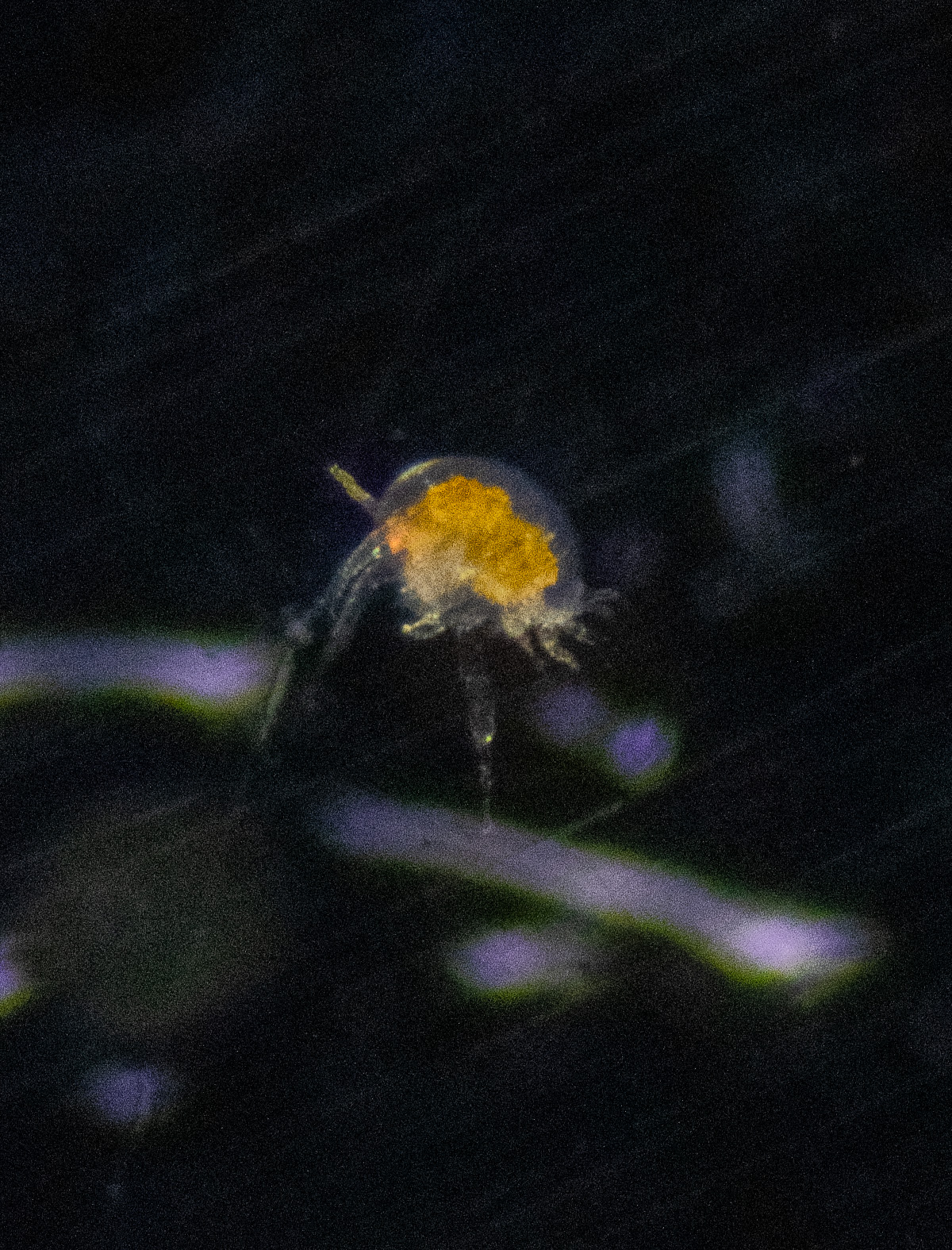
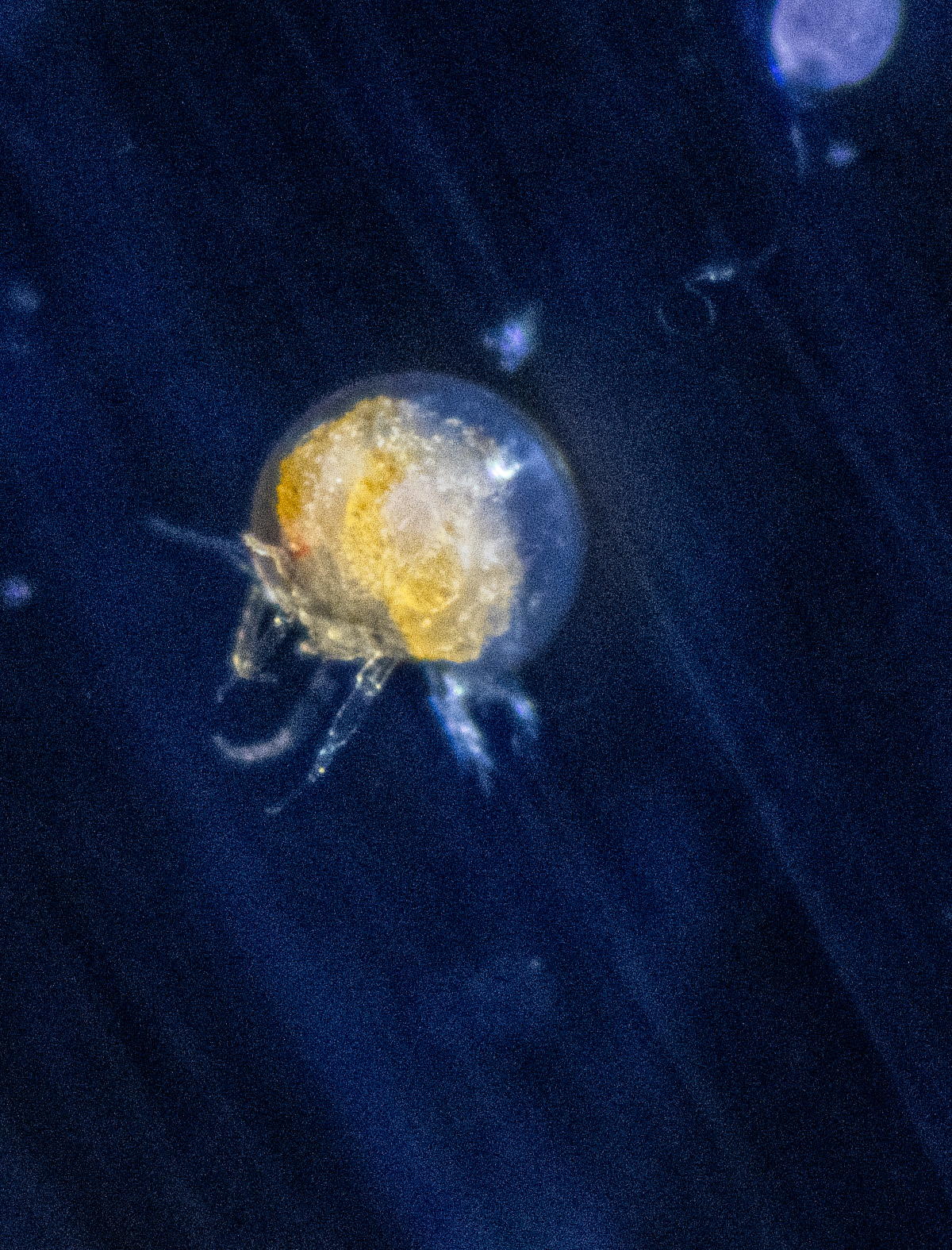
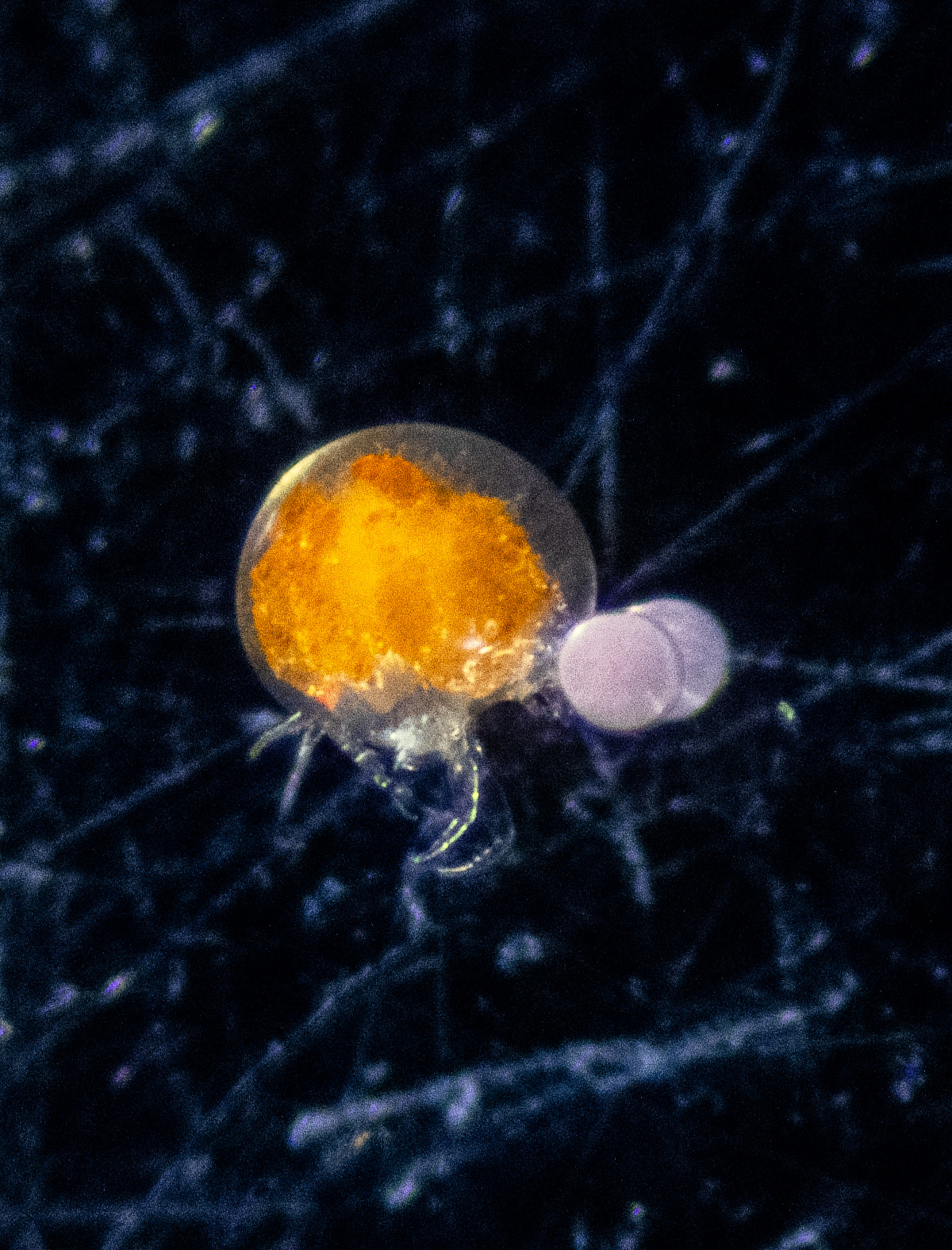
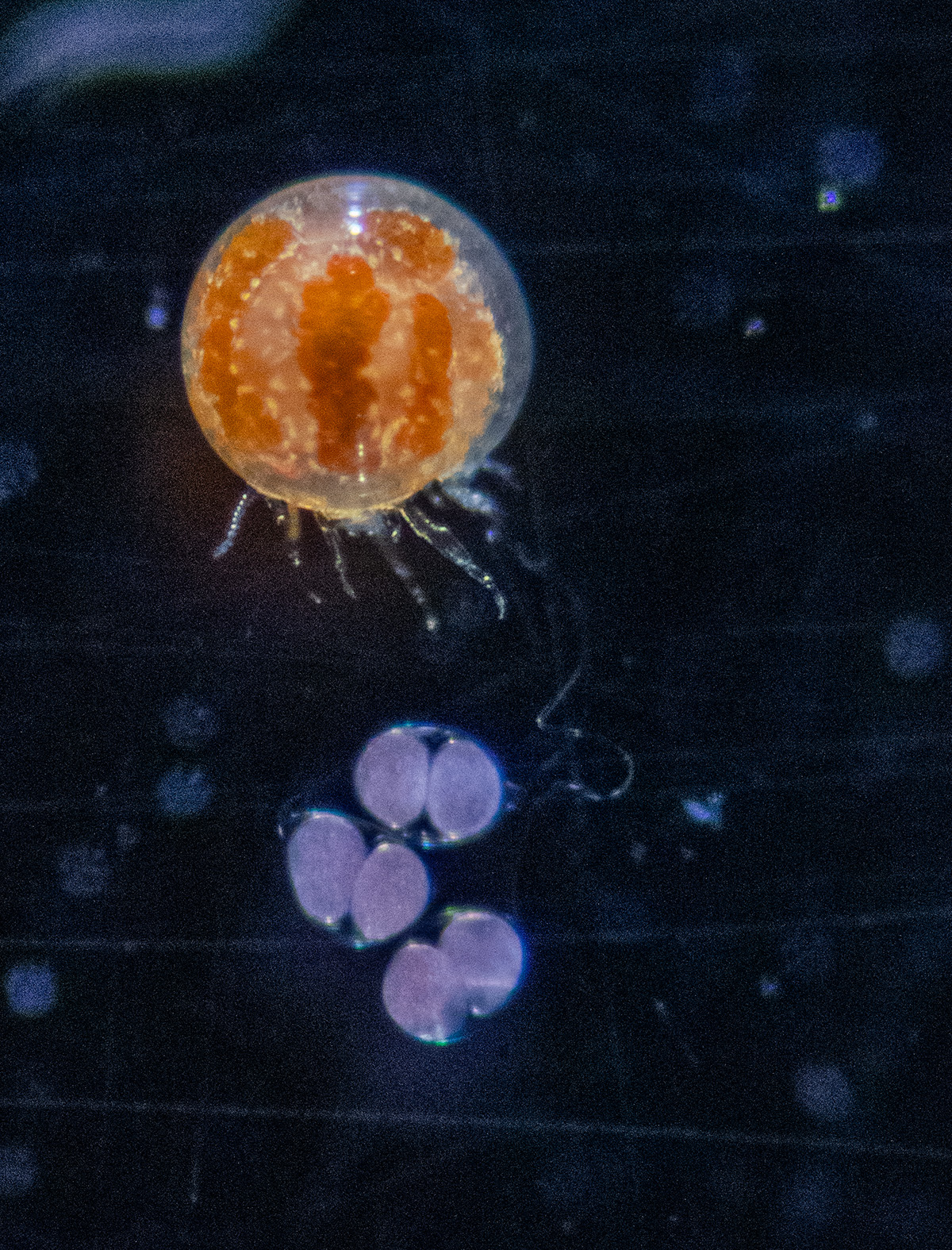
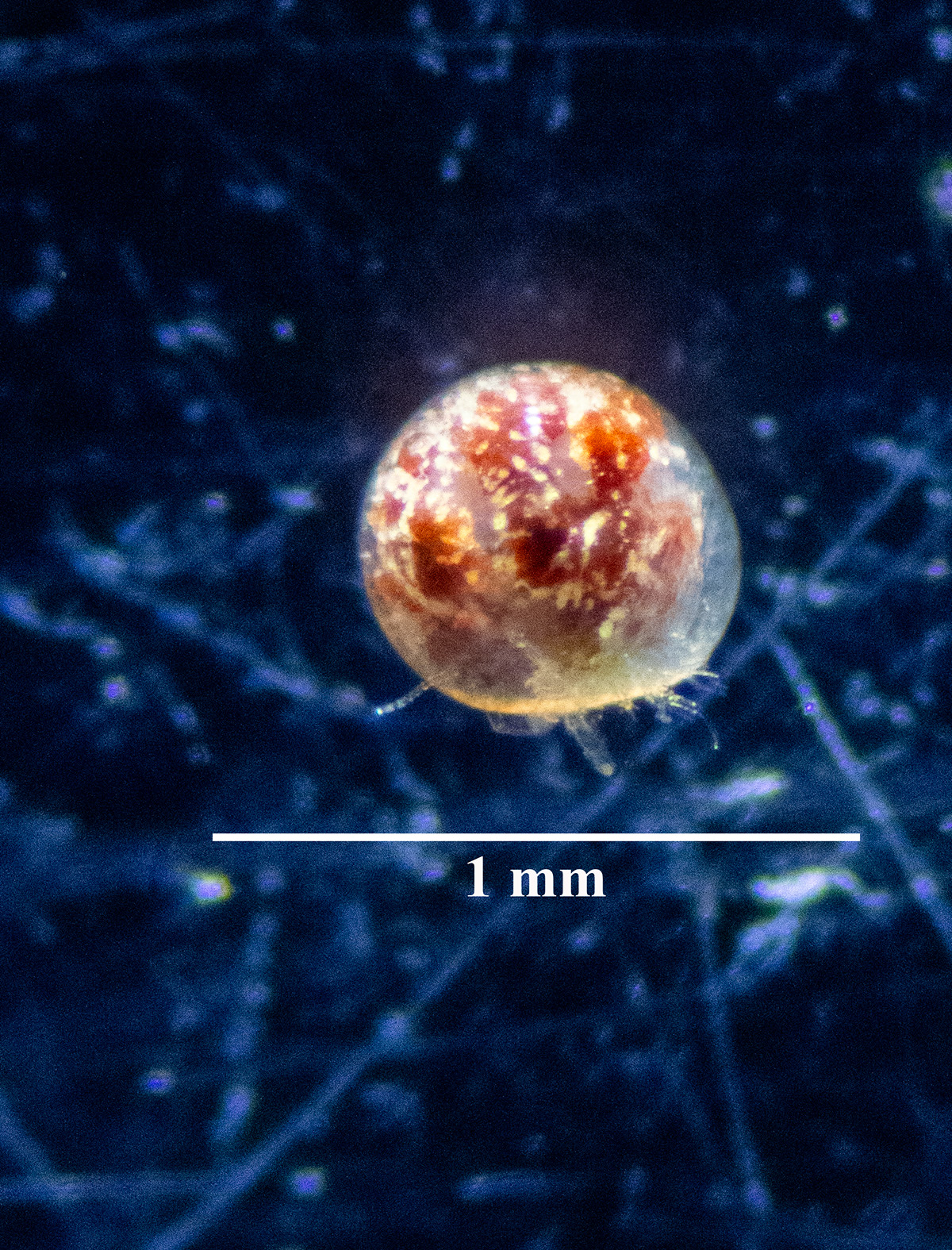
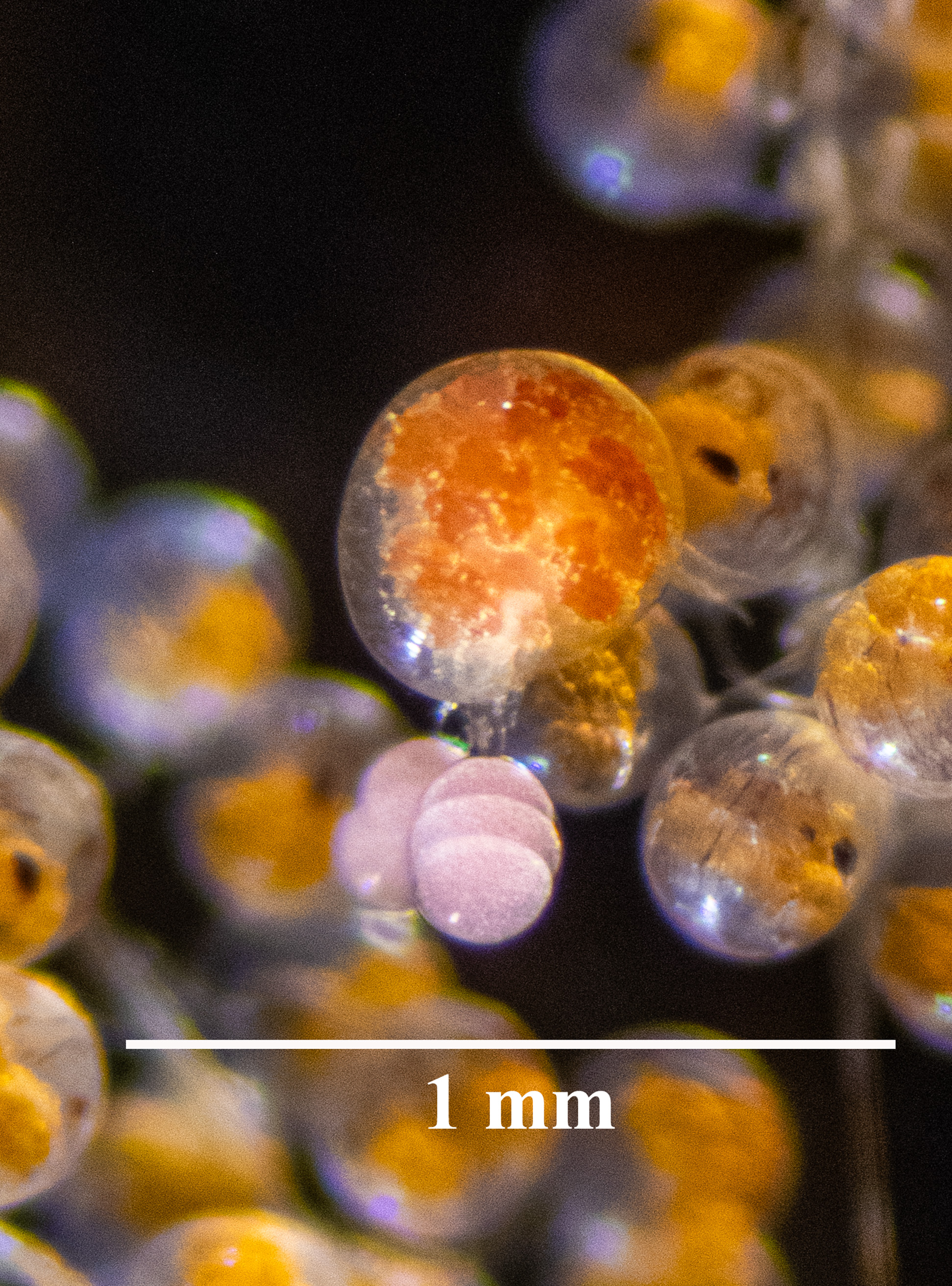
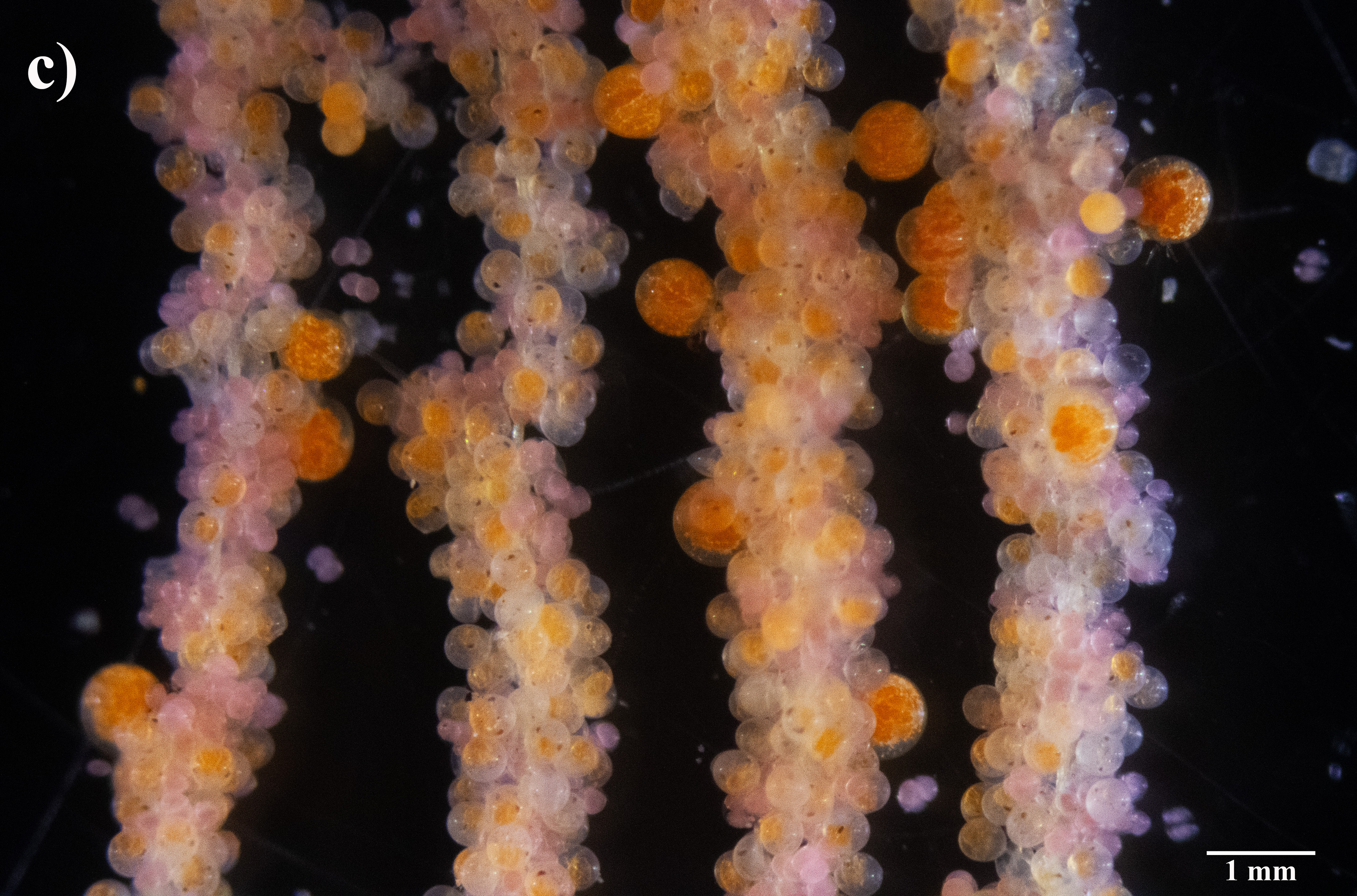
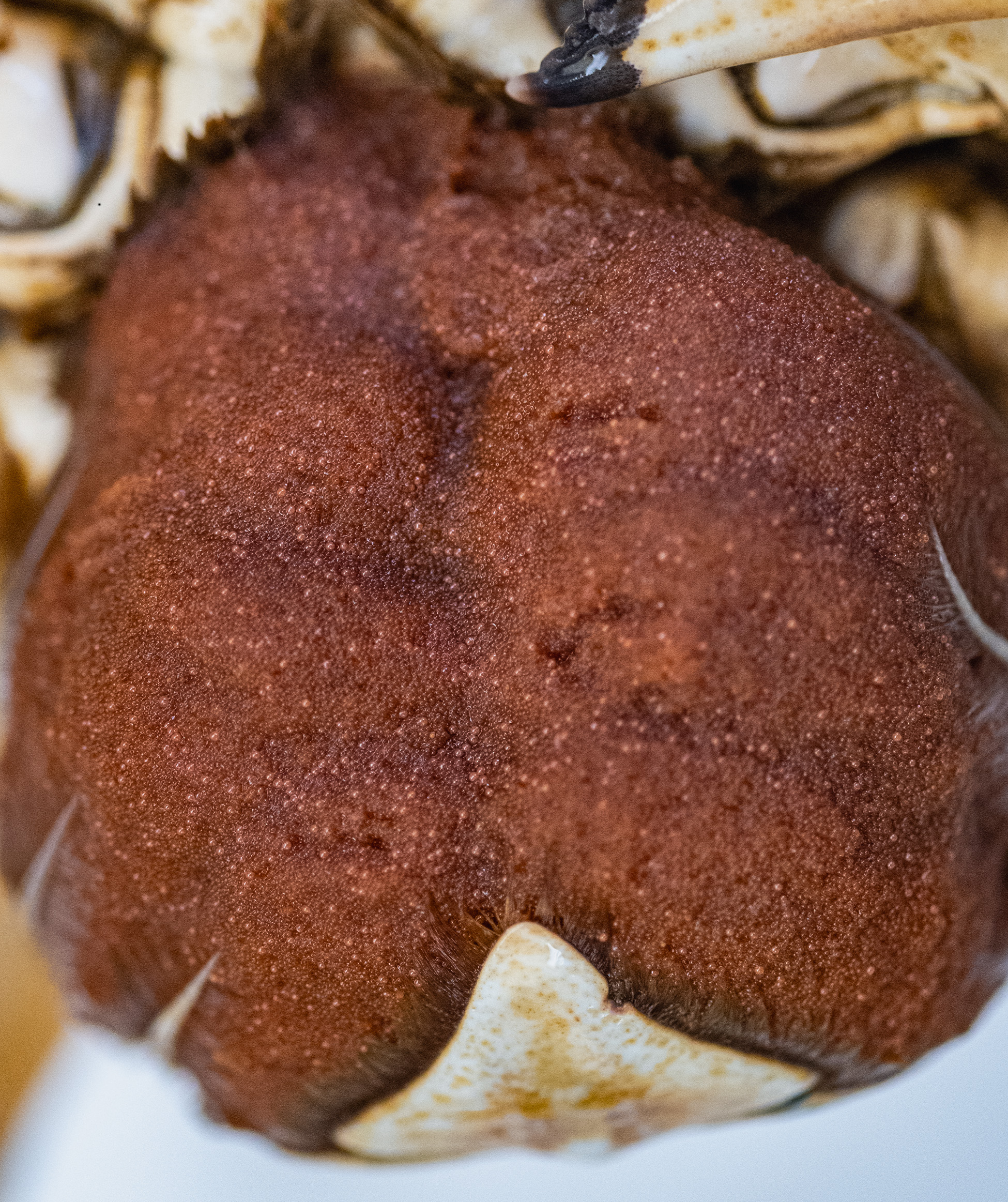
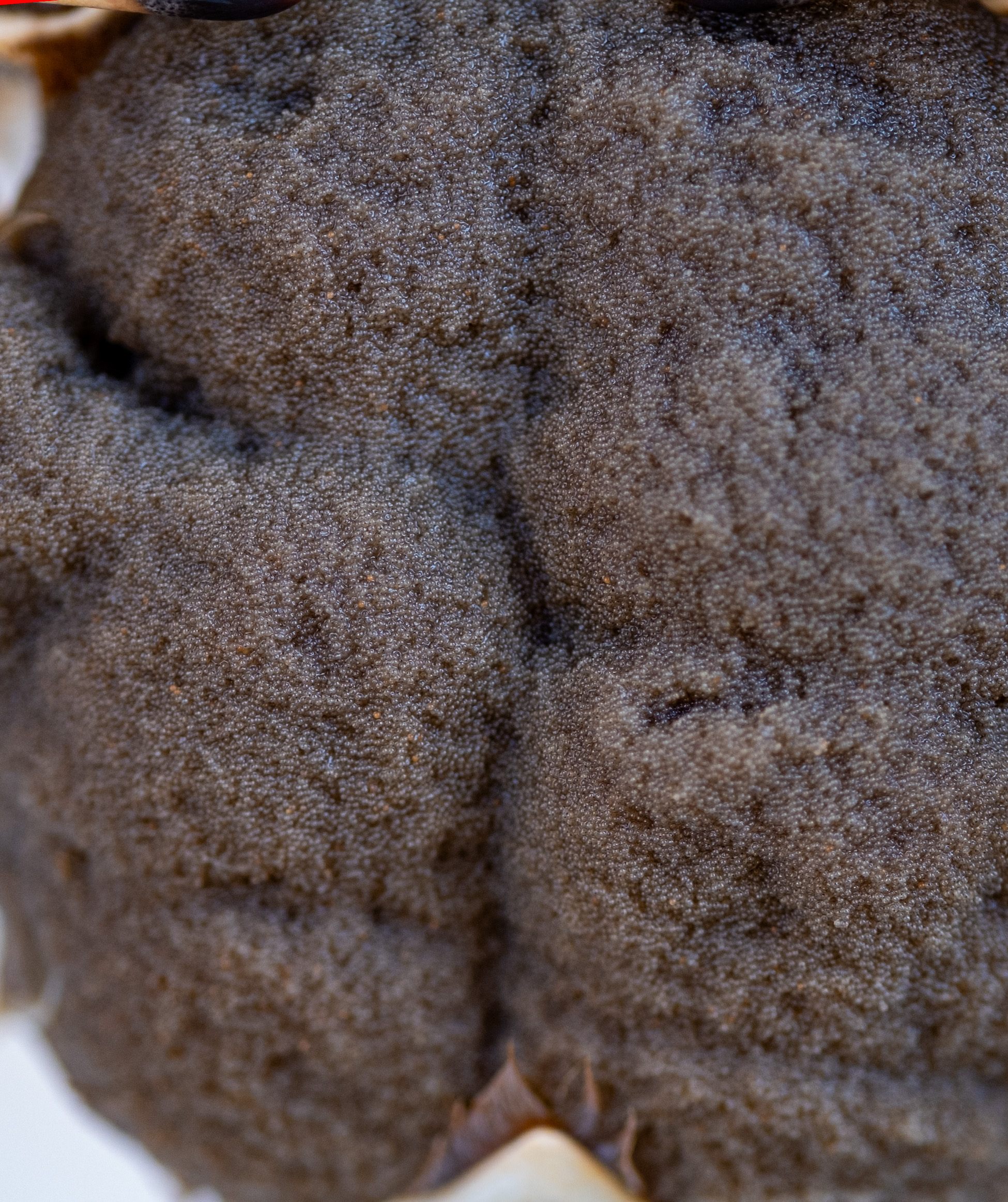
Figure 2 — Larval Nicothoids and Gill Infestations (Orli et al. 2025, Fig. 2)
Videos
Adult Nicothoid Behavior
Copepodids on Gills
Infested Egg Masses
Additional videos and raw files are archived in Zenodo: 10.5281/zenodo.10699477.
Outputs
- Peer-reviewed article:
- Orli et al. 2025. Discovery of an Unidentified Species of Nicothoid Copepod Infesting Cancrid Crabs in Santa Barbara, California. Ecology 106(12): e70263.
- Open data & code:
- Dryad dataset and analysis code: 10.5061/dryad.rv15dv4fw.
- Multimedia:
- High-resolution videos and supplementary media: 10.5281/zenodo.10699477.
Acknowledgements
This project builds on work with the Kuris Lab at UCSB, collaborators who helped collect crabs and identify copepods, and the UCSB Coastal Fund (CF-202204-02367), which supported field and lab work. :contentReferenceoaicite:11