SONGS Mitigation Monitoring Program — Salt Marsh Fish and Invertebrate Monitoring

Overview
The UCSB-led SONGS Mitigation Monitoring Program provides independent scientific oversight for two California Coastal Commission required mitigation projects: the Wheeler North Artificial Reef (kelp-forest habitat) and the San Dieguito Lagoon Restoration (coastal wetland).1 The reef’s permit standards require sustaining ≥150 acres of medium-to-high density giant kelp and ≥28 tons of reef fish standing stock,2 while the wetland permit (Condition A) requires creation or substantial restoration of ≥150 acres of tidal wetlands in Southern California—implemented at San Dieguito as ~115 acres of new tidal wetlands plus ~35 acres of enhancement credit for maintaining an open tidal inlet.3
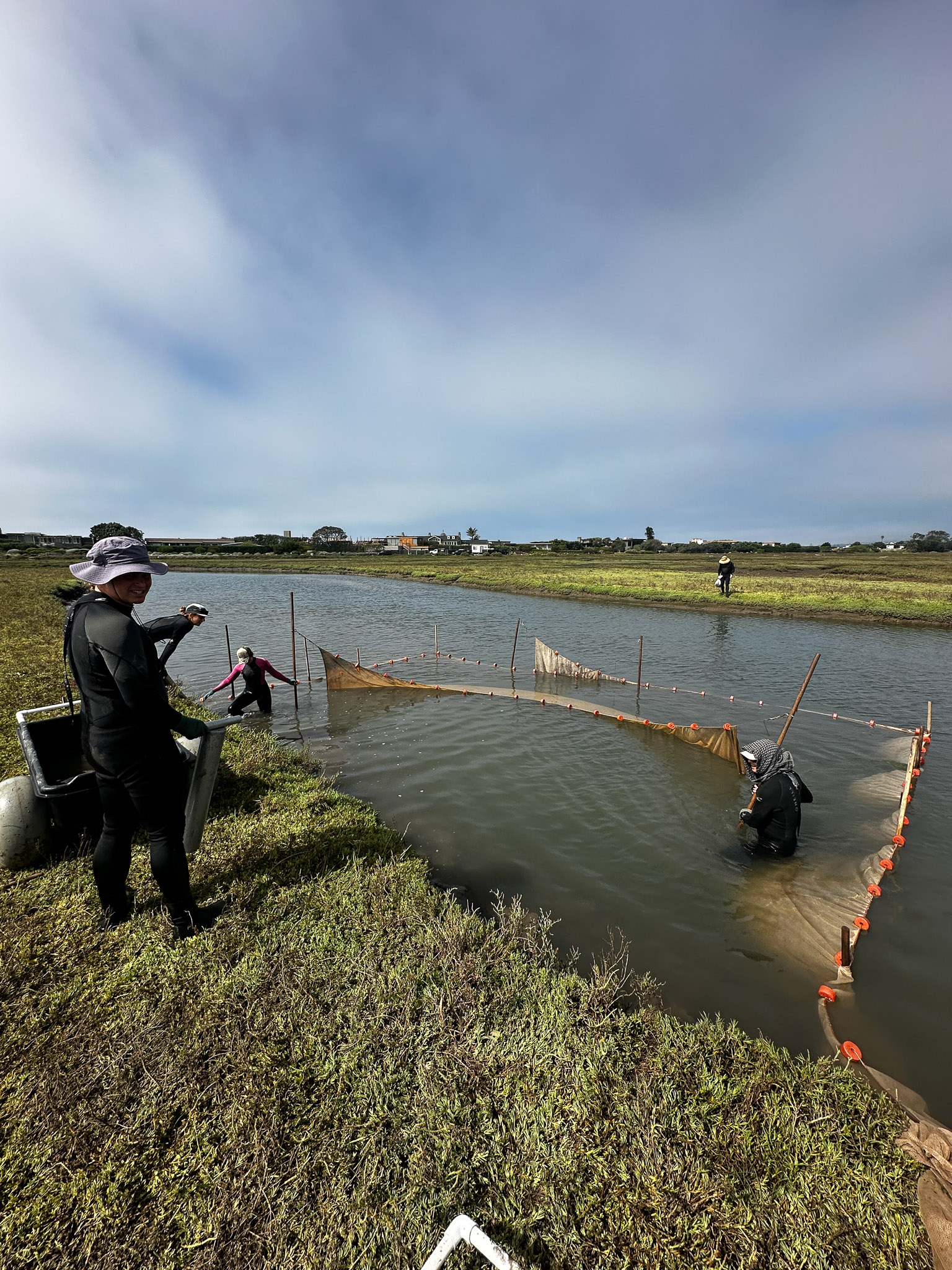
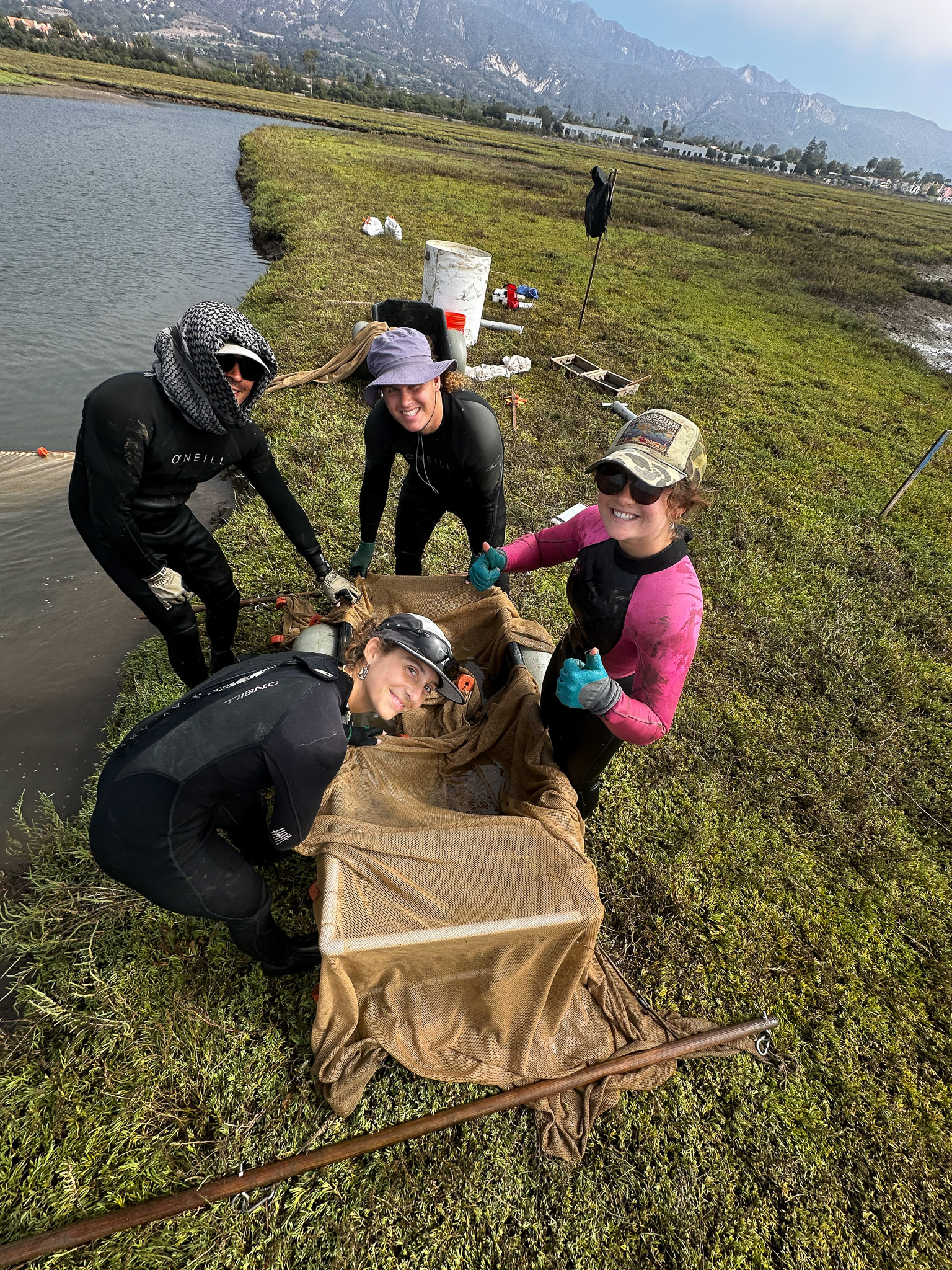
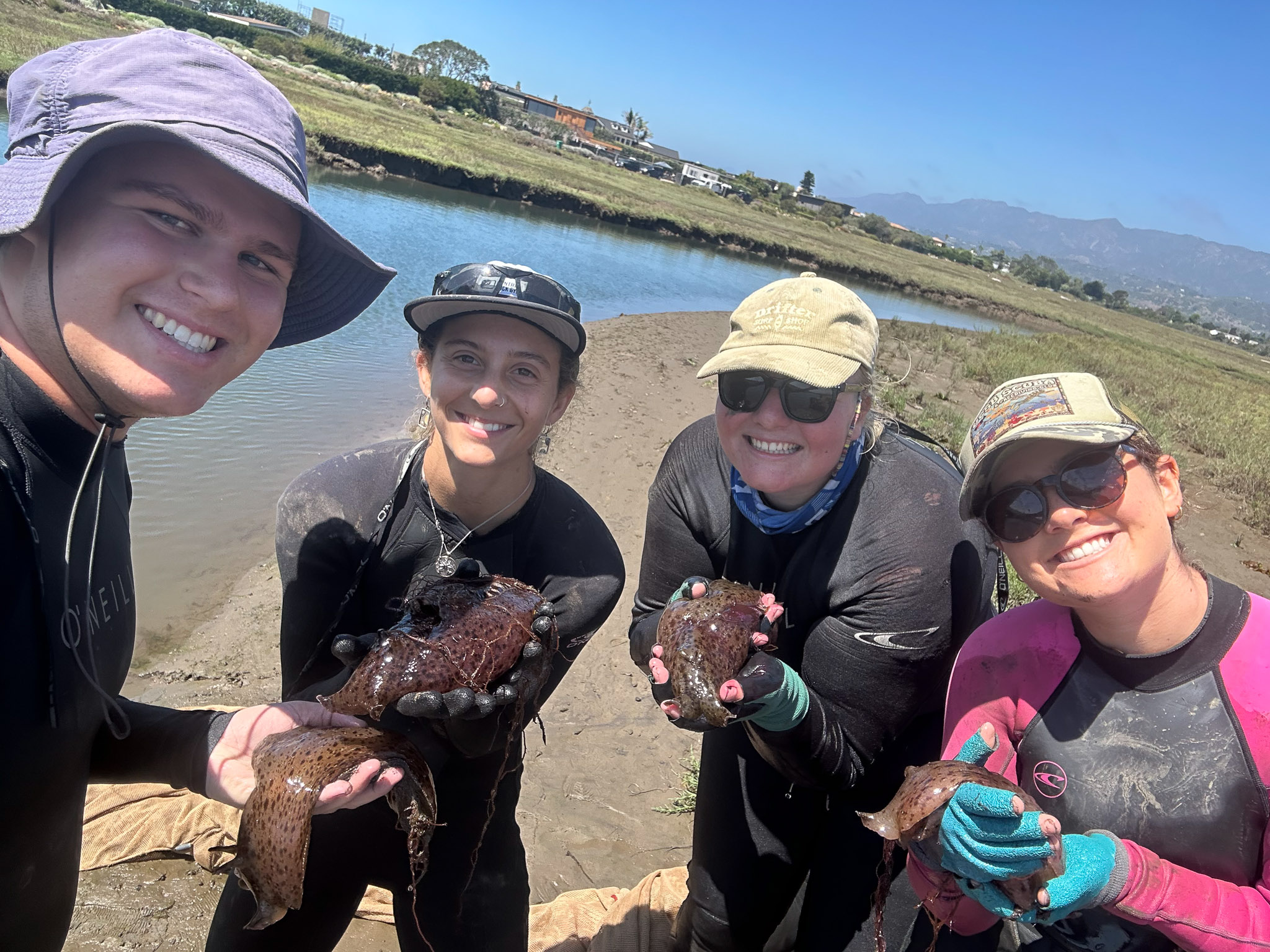
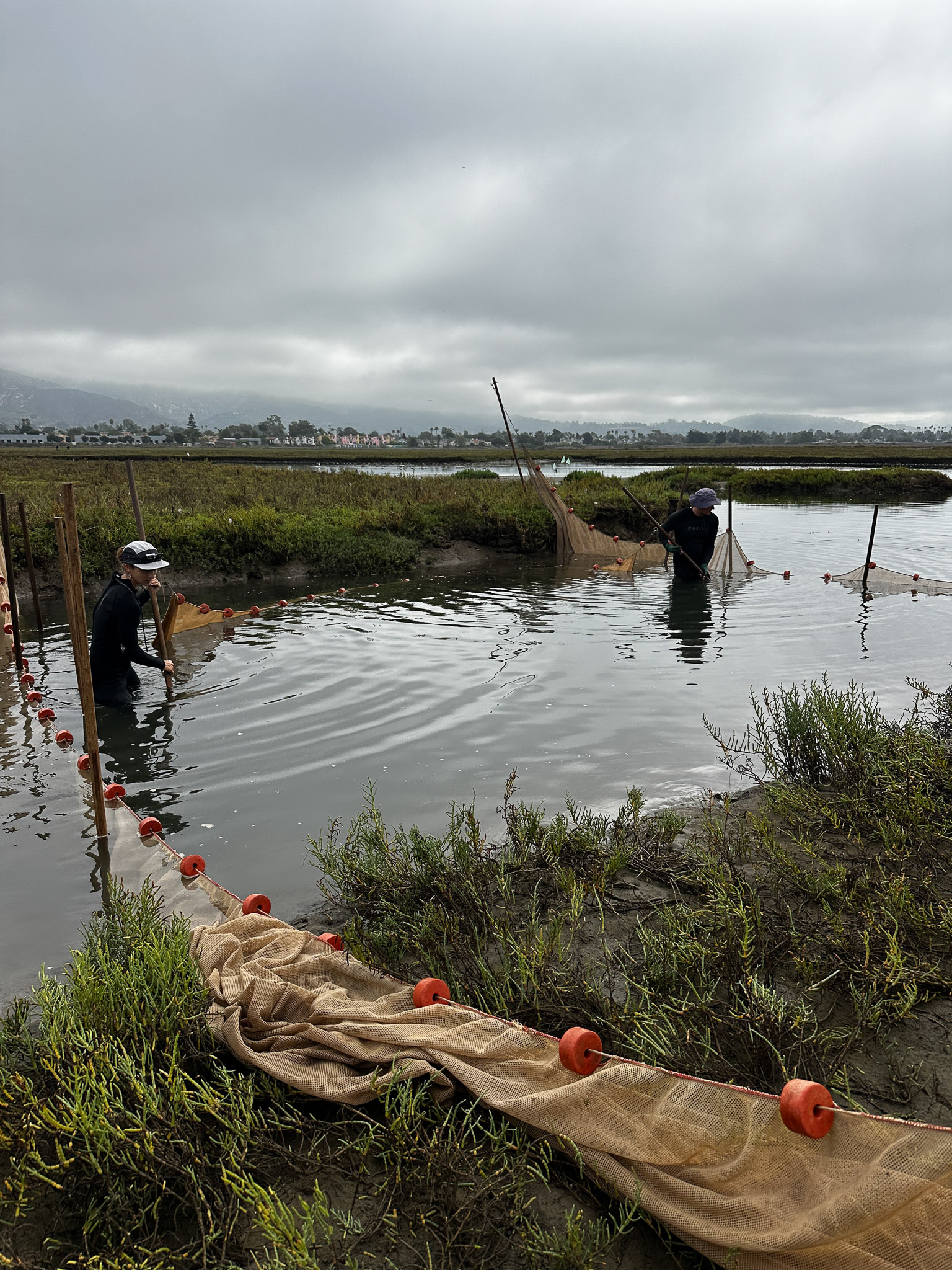
Within the wetland program, the restored San Dieguito site is evaluated relative to natural reference marshes. My role focuses on two of those reference sites (Carpinteria Salt Marsh Reserve and Point Mugu Lagoon) where I help run standardized fish and invertebrate community surveys, identify and process samples in the lab, and support QA/QC. I do not sample at the San Dieguito restoration directly, but our reference-site data provide the benchmarks used to assess restoration performance over time.4
Quick Facts
- Role: Lab Technician (UCSB)
- When: Aug 2025 – Jan 2026
- Skills: community sampling, species ID, sample processing, data QA/QC, field & lab equipment
- Links: Program site: https://marinemitigation.msi.ucsb.edu/
Background and Questions
This work tracks community composition and ecological recovery in restored and reference salt marshes. We ask: How do fish and invertebrate assemblages change over time? Are restoration targets being met? Which environmental factors co-vary with community structure, and where might remediation improve performance?
Methods
- Standardized community surveys (e.g., gear deployment, timed/count protocols)
- Lab processing of collected samples (ID, measurements)
- Data management and QA/QC workflows to support long-term reporting
Results (preview)
- Field season progress notes and initial summaries (coming soon).
- Annual report excerpts will be linked here when available.
Outputs
- Report (coming soon)
Acknowledgements
SONGS Mitigation Monitoring Program team, Marine Science Institute (UCSB), collaborators and partners.
Footnotes
UCSB Marine Science Institute — SONGS Mitigation Monitoring Program (program overview and components). https://marinemitigation.msi.ucsb.edu/↩︎
Artificial Reef page and reef monitoring/permit materials describing standards for ≥150 acres kelp and ≥28 tons reef fish standing stock. See: https://marinemitigation.msi.ucsb.edu/artificial-reef and Monitoring Plan PDF.↩︎
Wetland pages describing Condition A (≥150 acres tidal wetlands) and the San Dieguito implementation (~115 acres creation + ~35 acres enhancement credit for inlet maintenance). See: https://marinemitigation.msi.ucsb.edu/wetland/restoration-planning-construction/restoration-planning.↩︎
Wetland monitoring uses natural reference sites to benchmark San Dieguito’s performance; the program identifies Tijuana Estuary, Point Mugu Lagoon, and Carpinteria Salt Marsh Reserve as reference wetlands. See the wetland monitoring/plan materials on the SONGS site.↩︎