Microbial Hydrocarbon Cycling — Coal Oil Point
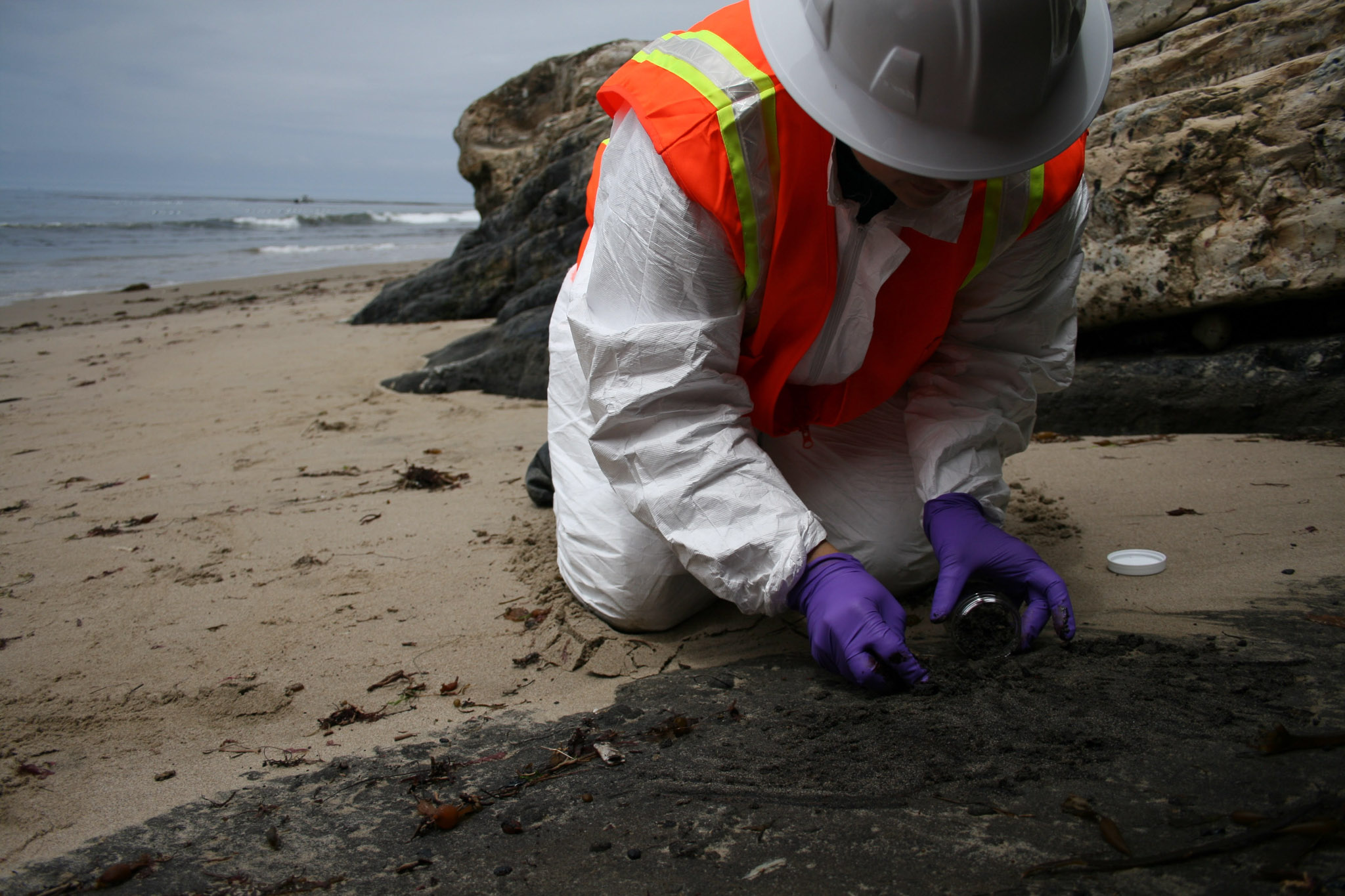
Overview
This project tests the link between biogenic hydrocarbon cycling and the microbial response to petroleum at Coal Oil Point. We incubate coastal seawater with liposome+alkane (to mimic phytoplankton production), liposome+petroleum, and substrate-only treatments, then track community shifts with archaeal-inclusive 16S amplicons and MGII-targeted qPCR.1 Fieldwork and analyses are led in the Valentine Lab (UCSB).2
Quick Facts
- Role: Researcher, Valentine Lab (UCSB)
- When: Jan 2023 – Aug 2025
- Skills: small-boat sampling, incubations, DNA extraction, 16S rRNA (archaea-inclusive), qPCR (MGII), bioinformatics (DADA2/QIIME-style), figure design
- Motivation: Do MGII archaea consume biogenic alkanes and are they inhibited by petroleum exposure?3
Background and Questions
- Does the short-term, phytoplankton-derived alkane cycle help “prime” microbial communities that can act as biofilters when oil enters the system?
- Which treatments (liposome+alkane vs. liposome+petroleum) increase MGII abundance and shift overall community composition?4
Methods
- Step 1 — Sample collection: coastal seawater near Coal Oil Point; summer emphasis when MGII often increase in the SBC.
- Step 2 — Incubations (~72 h): liposome+alkane, liposome+petroleum, alkane-only, petroleum-only; in-situ temp/light.
- Step 3 — Analysis: DNA extraction → 16S rRNA amplicons (archaea-inclusive primers) → community profiles; qPCR with MGII-specific primers → absolute/relative abundance. Sequencing via AVITI at UC Davis Core; bioinformatics with DADA2 and related tools.5
Results (preview)
Data collection and analysis are ongoing. Early goals focus on quality-controlled 16S profiles, MGII qPCR calibration, and treatment comparisons; figures will be added here as they finalize.
Outputs
- Poster / slides (coming soon)
- Manuscript (planned)
Acknowledgements
Valentine Lab (UCSB), Dr. David Valentine, Dr. Eleanor Arrington; thanks to campus small-boat program and Coastal Fund.
Footnotes
Project summary, methods, and motivation from the Coastal Fund proposal (liposome treatments; 16S with archaeal-inclusive primers; MGII qPCR; AVITI sequencing).↩︎
Project overview slides: Microbial Hydrocarbon Cycling at Coal Oil Point (Valentine Lab).↩︎
Project summary, methods, and motivation from the Coastal Fund proposal (liposome treatments; 16S with archaeal-inclusive primers; MGII qPCR; AVITI sequencing).↩︎
Project summary, methods, and motivation from the Coastal Fund proposal (liposome treatments; 16S with archaeal-inclusive primers; MGII qPCR; AVITI sequencing).↩︎
Project summary, methods, and motivation from the Coastal Fund proposal (liposome treatments; 16S with archaeal-inclusive primers; MGII qPCR; AVITI sequencing).↩︎